Your Own T-Rex Dinosaur in Your Home
📅 2026 Update: Changes in Science and Law Affecting Your T-Rex Dinosaur
Since the original article was published, there have been significant updates in the regulation of laboratory-developed tests (LDTs) and biospecimen security policies. These changes influence how genetic testing and research involving organisms like dinosaurs could be approached legally and scientifically. The original article continues further down the page, providing a foundation for understanding these updates.
🧬 FDA Regulation of Laboratory-Developed Tests (LDTs)
In 2026, LDTs are no longer under FDA oversight. The FDA's 2024 rule aimed to regulate LDTs like medical devices but was vacated by a federal court in Texas in 2025. This means genetic testing labs can operate without seeking FDA approval or clearance.
- 🛡️ No New Requirements: There are no forms or steps required for LDTs, only the existing CLIA certification remains necessary.
🔬 NIH Biospecimen Security Policy
The NIH implemented a new biospecimen security policy on October 24, 2025. This policy safeguards human biospecimens collected with NIH funding, focusing on preventing misuse of sensitive health data.
- 🔍 Focus on Security: The policy applies to all human biospecimens from U.S. persons, regardless of identifiability.
🧪 OSTP Framework for Nucleic Acid Synthesis Screening
The OSTP launched a framework on April 29, 2024, that became effective in 2025. It sets guidelines for procuring synthetic nucleic acids and devices that can produce them.
- ⚙️ Compliance Required: Providers must meet specific screening criteria to ensure responsible use of synthetic genetic materials.
📌 Key Points Summary
- 🧬 LDTs no longer require FDA approval as of 2026.
- 🔬 NIH policy protects human biospecimens from misuse.
- 🧪 OSTP framework establishes guidelines for nucleic acid synthesis.
- 📅 Important dates include policy implementation in October 2025 and April 2025.
💡 Practical Tips for Navigating Science and Law
Reviewing the specifics of your situation with an attorney is essential to understand the legal implications of your research or testing.
🧬 Understand LDT Regulations
Since LDTs do not require FDA oversight, it's crucial to ensure compliance with existing CLIA regulations. Familiarize yourself with these rules to avoid any legal issues.
🔍 Secure Human Biospecimens
If working with human biospecimens, adhere to the NIH's security policy. This protects sensitive health information and ensures compliance with federal requirements.
🧪 Follow OSTP Framework Guidelines
For those involved in synthetic nucleic acids, familiarize yourself with the OSTP framework. Compliance with its requirements helps prevent unauthorized access to genetic materials.
📅 Stay Updated on Changes
Science and law are constantly evolving. Regularly check for updates on regulations that may affect your research or testing.
🧑🔬 Use Available Resources
Both the FDA and NIH provide resources and guidance on their websites. Utilizing these resources can help clarify any uncertainties in navigating new regulations.
🏆 Ranked by User Reviews (2026)
The services listed below offer DNA testing and genealogical research, which tie into the themes of genetic testing and biospecimen security. The order follows Trustpilot data as of October 2026, and scores can change. Ratings reflect user experiences, noting that unhappy customers often leave more reviews.
🥇 1. 23andMe
23andMe has been rated 3.5 on Trustpilot. It is known for DNA testing, ancestry reports, and health insights. However, some reviewers express concerns over the accuracy of results and issues with customer service.
🥈 2. Ancestry.com
Ancestry.com also holds a 3.5 rating. It specializes in genealogical research and helps users build family trees. Some customers point out subscription costs and difficulties in navigating the website as drawbacks.
🆓 Free Government Resources
The FDA and NIH offer guidance documents and resources related to LDTs and biospecimen security. These can help users navigate legal requirements without additional costs.
🔎 Considerations for Choosing Services
- 📊 Compare Trustpilot scores and reviews.
- 📚 Evaluate the specific services offered.
- 🚫 Look for any known caveats or issues.
- 🔍 Check for compliance with legal regulations.
❓ Frequently Asked Questions
❓ What are laboratory-developed tests (LDTs)?
LDTs are tests developed by laboratories for specific patient needs. They include genetic tests and are not subject to FDA oversight as of 2026.
🧬 Why is biospecimen security important?
Biospecimen security protects sensitive personal health data from misuse, particularly from foreign adversaries. This is critical for maintaining patient confidentiality and trust.
🔬 How does the OSTP framework impact genetic research?
The OSTP framework sets guidelines for using synthetic nucleic acids, ensuring that only qualified providers can access these materials. This helps prevent misuse and promotes responsible research.
📅 Are there any deadlines I should know about?
There are no current deadlines for LDTs. The NIH biospecimen policy became effective on October 24, 2025, and the OSTP framework was effective starting April 29, 2025.
🛠️ How can I ensure compliance with NIH policies?
Adhering to the NIH biospecimen security policy is essential. Familiarize yourself with the guidelines and utilize available resources for compliance.
🔍 Where can I find more information on these topics?
The FDA and NIH websites offer comprehensive guidance and resources related to LDTs, biospecimen security, and synthetic nucleic acids.
⚖️ Recent Cases Related to Science and Law
Recent court rulings impact the regulation of laboratory-developed tests and biospecimen security policies, shaping how research and genetic testing are conducted.
- Puerto Rico court revokes dismissal of environmental lawsuitTribunal De Apelaciones De Puerto Rico/Court of Appeals of Puerto Rico · August 31, 2026
- Court rules on environmental challenge in NJ development caseNew Jersey Superior Court Appellate Division · August 3, 2023
- Puerto Rico court rules on legitimacy of environmental claimsTribunal De Apelaciones De Puerto Rico/Court of Appeals of Puerto Rico · April 14, 2026
- Florida court affirms ruling on environmental case appealDistrict Court of Appeal of Florida · August 20, 2021
For further insights, feel free to browse more rulings on the news page.
End of October 2026 Update
Your Own T-Rex Dinosaur in Your Home
For many dinosaur enthusiasts, having their own T-Rex dinosaur at home would be a dream come true. Imagine being able to experience the majesty and grandeur of one of the most iconic creatures to have ever lived. Well, with advancements in technology, that dream may now be a reality through Augmented Reality (AR) experiences. In this article, we explore how you can have your own T-Rex dinosaur in your home using AR technology.
What is Augmented Reality?
Augmented Reality (AR) involves the overlaying of digital content onto the real, physical world. This technology typically uses cameras on smartphones and tablets to scan the environment and detect surfaces and objects to superimpose digital content on top of. AR technology provides an immersive and interactive experience, enabling users to engage with digital content in the real world.
Getting Your Own T-Rex
Several mobile applications bring dinosaurs, including the T-Rex, into your home with AR technology. These applications allow you to experience the dinosaur's size, scale, movement, sound, and behavior in real-time. By simply pointing your smartphone and tablet camera to a flat surface in your home, you can transform your living room into a prehistoric wonderland. These AR applications also allow you to take photos and videos of your T-Rex encounters, enabling you to share your experiences with friends and family.
Benefits of AR T-Rex Experience
The AR T-Rex experience provides several benefits, including:
1. Educational Value: The T-Rex AR experience helps children learn about dinosaurs and their characteristics and behaviors.
2. Entertainment Value: The T-Rex AR experience offers a fun and interactive experience for users who enjoy dinosaurs and learning about prehistoric creatures.
3. Accessibility: The T-Rex AR experience provides an accessible and convenient way to interact with dinosaurs, as users can engage with the technology from the comfort of their homes.
4. Engagement: The T-Rex AR experience encourages engagement and play, providing users with an immersive and visually striking experience.
Conclusion
The T-Rex AR experience offers a unique and immersive way to engage with dinosaurs and travel back in time to the prehistoric era. Whether for education or entertainment purposes, having your own T-Rex dinosaur in your home is an innovative and fun opportunity that technology now provides. As AR technology continues to evolve, we can expect even more realistic and exciting dinosaur experiences, offering new opportunities for learning, entertainment, and engagement.
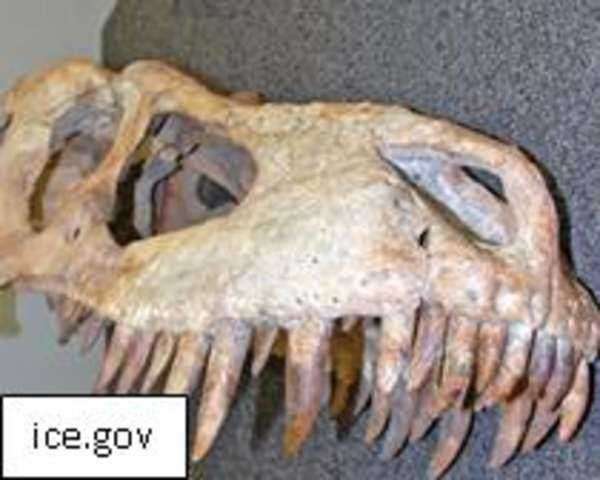
The Smithsonian's National Museum of Natural History has amassed an incredible collection of fossils, but one of the most iconic dinosaurs in the world wasn't there. Now, under a loan agreement from the U.S. Army Corps of Engineers, the Smithsonian will have a Tyrannosaurus Rex of its very own.
The National Museum of National History is scheduled to re-open its Dinosaur Hall in 2019, and just revealed that its centerpiece will be the Wankel T-Rex, a nearly complete skeleton that has until now been housed at the Museum of the Rockies in Bozeman, Montana. The Wankel skeleton is named for rancher Kathy Wankel, who discovered the first bones of the fossil in 1988 on federal land in eastern Montana. After a two-year process of uncovering and removing the skeleton, it was loaned to Montana State University, where the Museum of the Rockies is located.
Under the terms of the lease agreement, the U.S. Army Corps of Engineers, which has owned the fossilized skeleton since its discovery, will loan the Wankel T-Rex to the National Museum for 50 years. The Museum of the Rockies will obtain another almost complete T-Rex skeleton to replace the Wankel T-Rex in its collection.
Because the museum won't be opening the new dinosaur exhibit for another five years, curators say that portions of the T-Rex skeleton will be displayed in various places in the museum during the planned renovation.
The Smithsonian says that once the T-Rex fossil is on display, it will become the most widely viewed Tyrannosaurus in the world, with over 7 million annual visitors coming to see it. Today, the museum has plaster and plastic reproductions of T-Rex skeletons, but does not have any actual fossilized remains. With the addition of the Wankel skeleton, they will now have a T-Rex that is between 80 and 85 percent complete.
In order to transport the fossil across the United States, a special shock-absorbing truck trailer will be used. The fossil is scheduled to arrive at the Smithsonian on National Fossil Day—October 16. In 2014, the museum plans to host a temporary exhibit to welcome the T-Rex skeleton, and has sent archaeological crews to North Dakota who will work to gather other fossils of creatures and even plants that lived in the same era as the dinosaur.
Tyrannosaurus skeletons have been found primarily in Canada and the Great Plains region of the United States. The Tyrannosaurus lived approximately 65 million years ago, when those regions were substantially warmer.