Your Own T-Rex Dinosaur in Your Home
📅 2026 Update: Changes in Science and Law Affecting Research and Genetic Testing
Since the original article was published, several important changes have taken place in the world of science and law in the U.S. These updates impact areas such as genetic testing, biospecimen security, and the regulation of synthetic nucleic acids. The following sections will outline these changes and how they relate to the topic of having a "T-Rex dinosaur" in your home, as they connect to the broader field of scientific research and its legal implications.
🧬 FDA Regulation of Laboratory-Developed Tests (LDTs)
In May 2024, the FDA aimed to enforce stricter regulations on LDTs. However, a federal court in Texas ruled in March 2025 that the FDA did not have the authority to regulate these tests. This led to the FDA rescinding its 2024 rule in September 2025.
As of 2026, labs are no longer required to seek FDA clearance, meaning many genetic tests can be conducted without oversight.
- 📊 The original 2024 rule was expected to affect around 80,000 existing tests across 1,200 laboratories.
- 🔍 Genetic testing labs, including those offering direct-to-consumer services, now operate without new compliance requirements.
🔒 NIH Biospecimen Security Policy
The NIH introduced a new policy effective October 24, 2025, aimed at improving the security of human biospecimens. This policy is designed to protect sensitive personal health data, especially from foreign adversaries. Researchers must follow specific guidelines when sharing or distributing these biospecimens.
- 🧬 This policy applies to all human biospecimens collected with NIH funding, regardless of whether they can be identified.
- 🔑 The goal is to prevent misuse of sensitive health information.
📜 OSTP Framework for Nucleic Acid Synthesis Screening
In April 2024, the White House Office of Science and Technology Policy released a framework focused on nucleic acid synthesis. This framework, which took effect on April 29, 2025, outlines requirements for procuring synthetic nucleic acids and devices that manufacture them.
- 🧪 It aims to ensure that only compliant providers can supply these materials, thus limiting access to potentially harmful genetic sequences.
- ⚙️ This framework builds on previous guidance from 2023, enhancing safety in genetic research.
📌 Key Points Summary
- 🧬 FDA Regulation of LDTs is no longer in effect, allowing more freedom for genetic testing labs.
- 🔒 The NIH Biospecimen Security Policy aims to protect personal health data from misuse.
- 📜 The OSTP Framework outlines compliance requirements for synthetic nucleic acids.
- 🔍 These changes impact the regulation and safety of genetic research and testing.
💡 Tips for Navigating Legal Changes in Genetic Testing
Review the details of your situation with your attorney.
🧬 Understand FDA Oversight
Be aware that, as of 2026, genetic testing labs are not under FDA oversight. This may affect the quality and reliability of tests. Always check if the lab has CLIA certification before proceeding.
🔒 Follow NIH Guidelines
If you're involved in research using human biospecimens, familiarize yourself with the NIH's new security policy. This policy is key to ensuring that sensitive data is protected when sharing specimens.
📜 Stay Compliant with OSTP Framework
For those working with synthetic nucleic acids, ensure you understand the requirements of the OSTP framework. Compliance is necessary to avoid legal issues and ensure the safe use of genetic materials.
🔍 Regularly Check for Updates
Science and law are rapidly evolving fields. Keep an eye on updates from the FDA, NIH, and OSTP to stay informed about any changes that may affect your work or interests.
🤝 Utilize Government Resources
Make use of the guidance documents and resources provided by the FDA and NIH. These can help clarify any uncertainties you may have about compliance and regulations.
🏆 Services Ranked by User Reviews (2026)
This section highlights genetic testing and research services relevant to the article's theme. The services listed here are ranked based on Trustpilot reviews as of October 2026. Ratings can fluctuate, and these scores are just one aspect of customer feedback.
🥇 1. Ancestry.com
Ancestry.com has been rated 3.5 on Trustpilot. It is known for genealogical research and family tree building, offering access to a vast array of historical records. However, users have noted issues with subscription costs and website navigation, which can affect the overall experience.
🥈 2. 23andMe
23andMe also holds a 3.5 score on Trustpilot. This service is recognized for DNA testing and providing ancestry reports along with health insights. Reviewers have raised concerns about the accuracy of results and customer service responsiveness, which are important factors to consider.
🆓 Free Government and Nonprofit Resources
Both the FDA and NIH offer free guidance documents and resources related to genetic testing and biospecimen security. These resources can provide valuable information for researchers and individuals interested in genetic testing without incurring costs.
🔎 Considerations When Choosing a Service
- ⚖️ Customer Ratings: Look at user reviews and overall star ratings.
- 🔍 Service Offerings: Check what specific tests or services are provided.
- 💰 Cost: Be aware of subscription fees or one-time costs associated with services.
- 📊 Accuracy: Consider the reliability of results based on user feedback.
- 🤝 Support: Evaluate the availability and quality of customer support.
❓ Frequently Asked Questions
🤔 What are Laboratory-Developed Tests (LDTs)?
LDTs are tests developed by laboratories that are used to diagnose or monitor diseases. As of 2026, the FDA does not regulate LDTs, allowing labs greater freedom in how they operate.
🔍 How does the NIH Biospecimen Security Policy affect researchers?
The NIH Biospecimen Security Policy requires researchers to follow specific guidelines for sharing or distributing human biospecimens. This ensures the protection of sensitive health data.
⚠️ What is the OSTP Framework for Nucleic Acid Synthesis Screening?
The OSTP Framework sets compliance standards for synthetic nucleic acids and devices that can synthesize them. This framework aims to enhance safety in genetic research by controlling access to these materials.
🧪 Are there any fees for complying with the NIH Biospecimen Security Policy?
The NIH Biospecimen Security Policy does not specify any fees for sharing or distributing human biospecimens. Researchers should still comply with the guidelines outlined in the policy.
📆 What is the timeline for changes in LDT regulation?
The FDA's enforcement discretion over LDTs ended in 2025 when a court ruled it lacked authority. As of 2026, there are no new deadlines or compliance requirements for these tests.
📑 Where can I find more information on genetic testing services?
You can find additional information through the guidance documents provided by the FDA and NIH. These resources are designed to help you navigate the complexities of genetic testing and research.
⚖️ Recent Cases Related to Science and Law
Recent court rulings have impacted the regulation of genetic testing and the oversight of laboratory-developed tests. These decisions connect to the broader implications for research and safety in the field of genetics.
- Court denies environmental groups' challenge to LNG projectCourt of Appeals for the Fifth Circuit · July 7, 2026
- Ninth Circuit Court Orders EPA to Reassess DecaBDE RulesCourt of Appeals for the Ninth Circuit · July 7, 2026
- Hawaii court dismisses appeal in Maui environmental caseHawaii Intermediate Court of Appeals · July 27, 2026
- Court upholds EPA's air pollution modification ruleCourt of Appeals for the D.C. Circuit · July 28, 2026
For more recent rulings, visit the news section of our website.
End of October 2026 Update
Your Own T-Rex Dinosaur in Your Home
For many dinosaur enthusiasts, having their own T-Rex dinosaur at home would be a dream come true. Imagine being able to experience the majesty and grandeur of one of the most iconic creatures to have ever lived. Well, with advancements in technology, that dream may now be a reality through Augmented Reality (AR) experiences. In this article, we explore how you can have your own T-Rex dinosaur in your home using AR technology.
What is Augmented Reality?
Augmented Reality (AR) involves the overlaying of digital content onto the real, physical world. This technology typically uses cameras on smartphones and tablets to scan the environment and detect surfaces and objects to superimpose digital content on top of. AR technology provides an immersive and interactive experience, enabling users to engage with digital content in the real world.
Getting Your Own T-Rex
Several mobile applications bring dinosaurs, including the T-Rex, into your home with AR technology. These applications allow you to experience the dinosaur's size, scale, movement, sound, and behavior in real-time. By simply pointing your smartphone and tablet camera to a flat surface in your home, you can transform your living room into a prehistoric wonderland. These AR applications also allow you to take photos and videos of your T-Rex encounters, enabling you to share your experiences with friends and family.
Benefits of AR T-Rex Experience
The AR T-Rex experience provides several benefits, including:
1. Educational Value: The T-Rex AR experience helps children learn about dinosaurs and their characteristics and behaviors.
2. Entertainment Value: The T-Rex AR experience offers a fun and interactive experience for users who enjoy dinosaurs and learning about prehistoric creatures.
3. Accessibility: The T-Rex AR experience provides an accessible and convenient way to interact with dinosaurs, as users can engage with the technology from the comfort of their homes.
4. Engagement: The T-Rex AR experience encourages engagement and play, providing users with an immersive and visually striking experience.
Conclusion
The T-Rex AR experience offers a unique and immersive way to engage with dinosaurs and travel back in time to the prehistoric era. Whether for education or entertainment purposes, having your own T-Rex dinosaur in your home is an innovative and fun opportunity that technology now provides. As AR technology continues to evolve, we can expect even more realistic and exciting dinosaur experiences, offering new opportunities for learning, entertainment, and engagement.
The Smithsonian's National Museum of Natural History has amassed an incredible collection of fossils, but one of the most iconic dinosaurs in the world wasn't there. Now, under a loan agreement from the U.S. Army Corps of Engineers, the Smithsonian will have a Tyrannosaurus Rex of its very own.
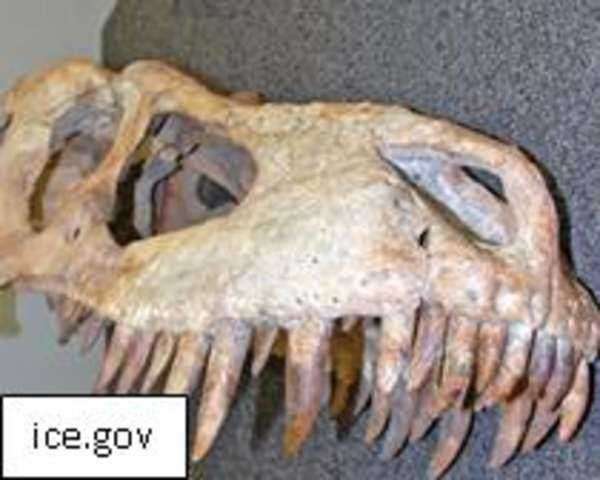
The National Museum of National History is scheduled to re-open its Dinosaur Hall in 2019, and just revealed that its centerpiece will be the Wankel T-Rex, a nearly complete skeleton that has until now been housed at the Museum of the Rockies in Bozeman, Montana. The Wankel skeleton is named for rancher Kathy Wankel, who discovered the first bones of the fossil in 1988 on federal land in eastern Montana. After a two-year process of uncovering and removing the skeleton, it was loaned to Montana State University, where the Museum of the Rockies is located.
Under the terms of the lease agreement, the U.S. Army Corps of Engineers, which has owned the fossilized skeleton since its discovery, will loan the Wankel T-Rex to the National Museum for 50 years. The Museum of the Rockies will obtain another almost complete T-Rex skeleton to replace the Wankel T-Rex in its collection.
Because the museum won't be opening the new dinosaur exhibit for another five years, curators say that portions of the T-Rex skeleton will be displayed in various places in the museum during the planned renovation.
The Smithsonian says that once the T-Rex fossil is on display, it will become the most widely viewed Tyrannosaurus in the world, with over 7 million annual visitors coming to see it. Today, the museum has plaster and plastic reproductions of T-Rex skeletons, but does not have any actual fossilized remains. With the addition of the Wankel skeleton, they will now have a T-Rex that is between 80 and 85 percent complete.
In order to transport the fossil across the United States, a special shock-absorbing truck trailer will be used. The fossil is scheduled to arrive at the Smithsonian on National Fossil Day—October 16. In 2014, the museum plans to host a temporary exhibit to welcome the T-Rex skeleton, and has sent archaeological crews to North Dakota who will work to gather other fossils of creatures and even plants that lived in the same era as the dinosaur.
Tyrannosaurus skeletons have been found primarily in Canada and the Great Plains region of the United States. The Tyrannosaurus lived approximately 65 million years ago, when those regions were substantially warmer.